Wednesday, July 18, 2012

how much is that birdie in the window?


In the comments on the next-most-recent post, Anonymous posted a link to a story on Sodahead ("a dynamic discussion community where you can discover, debate, and discuss issues that get you fired up") about Mayor Rothman, including a photo -- by Ren, right? -- of the mayor flipping him the bird.


I'm turning this into a separate topic because I am flat-out appalled.  Those who've met me know that I'm hardly a paragon of propriety, but then again, I'm not the mayor.  (I wanted to write that last clause in all-caps with a thousand exclamation points, but I managed to control myself.)


What disgusts me here isn't just the poor impulse control; again, I'm not one to talk.  But the fact that the mayor feels so confident in his status that he can just flip off a citizen with a camera -- now that speaks volumes.  That suggests a man who doesn't care what the voters think, because the photographer was Ren, for pete's sake -- the Weegee, Bill Cunningham, and Ansel Adams of Pomona, the man whose photos always get seen by the community.  


I can't help but interpret the mayor's insulting gesture as an indication that he thinks his re-election is in the bag.  Let's show him he's wrong.

Tuesday, July 17, 2012

A Huge Step Back and a Little Step Forward

Predictably, the Pomona city council did not follow the overwhelmingly expressed will of the people, and voted in favor of the Valley Vista Transfer Station (with Freddie Rodriguez and Cristina Carrizosa casting dissenting votes). The "mayor" recused himself from the proceedings.

In the presentation of the project, the applicant made a number of concessions to public pressure. He said he would only allow CNG trucks only on the site (except for 50 diesel trucks); that he would reduce the tonnage from 1500 to 1000/day (but with possibilities for future growth); that he would pay for a code enforcer for the area; and that he would fund a green-up project in the industrial area around the site. He did not commit to Pomona-only trash.

Still, even with these concessions, the majority of the speakers spoke against the station. They clearly remained unconvinced that Valley Vista had Pomona's best interests at heart, or that the business would be good for the city. They cited the city's lack of investigation into the project's locale and its effects on the water and soil. They voiced concerns about exponentially increased truck traffic, noise, and pollution. They suggested that cash for trash is not a sustainable approach to waste reduction, because it relies on the production of trash. They noted that Pomona already has the highest rate of NO2 emissions in the state and that project still will generate 3 times the recommended thresholds. They argued that  the city should only take care of its own trash and not become trash central. And they pointed out that the project disproportionally affects working class, people of color communities. They suggested that many more of the council should have recused themselves due to conflict of interest. Their arguments convinced many that the Valley Vista trash-for-cash model is a huge detriment to the city of Pomona and not in the interests of the people.

Proponents argued that allowing the Trash station would encourage businesses to come to Pomona, that all business is more or less equally polluting, and that opening the 9th street station would allow the open air 1st street station to close. The most tragically regressive argument was that the station was necessary because Pomona would economically revive and produce trash, just like back in the good old days of 1000+ tons/day. The argument that Valley Vista would bring money to the city was not mobilized, because it was revealed in the project presentation (thanks to Rodriguez's questioning) that the promised $1 million annual revenue would not cover the $1.5-2 million on repair for the damages to the roads that the project would inflict. 

It was discouraging to watch the council's lack of deliberation. Atchley, who spent much of the meeting reading on his ipad, said immediately that he was in favor of the project. Escobar, who spent much of the meeting texting, had little to say. Carrisoza put a motion on the floor to bring the project to ballot, but it failed without a seconder.  This lack of debate provoked an improptu protest, as a number of angry citizens chanted, marched and spoke out against the lack of  democratic debate.

That moment was the small step forward, which could become a giant step in time. People in this city are angry. People are mobilized. People can make change, even if the council is bought and sold to unsustainable business and corporate models. People can take the city of Pomona back. There are community groups working on sustainability; on anticorporate living; on art; on democratic process; on stopping the erosion of the library; on health; on youth empowerment.  People are saying no to the way that their democratically elected officials treat them. The people of Pomona can make this city a place for people. Let's do it. The government will have to follow...or maybe it will permanently recuse itself.


Monday, July 16, 2012

Why I support the Pomona Valley Transfer Station project

After reviewing the EIR, the numerous staff reports, and paging through public comment at the Planning Commission hearings, I've come to the conclusion that the Pomona Valley Transfer Station should be approved, with additional conditions. It seems that the IESC, one of the main organizers against the trash station, have also decided to make demands rather than killing the project altogether.

With the owner of PVTS also owning rights to the First Street Direct Transfer Station, this transfer station - which actually is directly across the street and railroad tracks from a school (rather than being over 2/3 of a mile away) - should close as soon as PVTS opens. Other conditions that should be imposed beyond the list of items in the staff report include extending the designated community liaison for construction issues to a permanent position for the life of the project, offering temporary relocation to the three residences which will have noise exceeding environmental limits during construction, posting signage at the station for a direct hotline to the City of Pomona for any issues related to transfer station operation, and expediting enforcement of violations of the conditional use permit to avoid the situation that happened with Angelo's Pizzeria. As the newspaper notes, PVTS will generate over a million dollars in revenue when opened. That's money that we need to keep services open. Utility taxes were on the ballot in the past and failed miserably, so it is clear that the only way we can attain more revenue is to attract more businesses. After thousands of dollars in effort in preparing environmental documents and plans, rejection of this project would send a bad message to future Pomona developers.

Overall, I am hopeful that this project will now not have to go into litigation, which would just paralyze the community again. I am hopeful that the City Council will follow the statutory requirements, hear all public comment, and come a decision based on the evidence before it. I expect a 4-2 vote to approve. See you all tomorrow.

Saturday, July 14, 2012

Talking trash - Guide to Monday's meeting

As we head towards what may be possibly the best attended public hearing in Pomona in a long time, let's take a look at some of the arguments for and against, and review the possible votes for the project. Unfortunately, I won't be there for the hearing, as I have a work trip to Sacramento that week. So you will have to get your coverage from someone else.


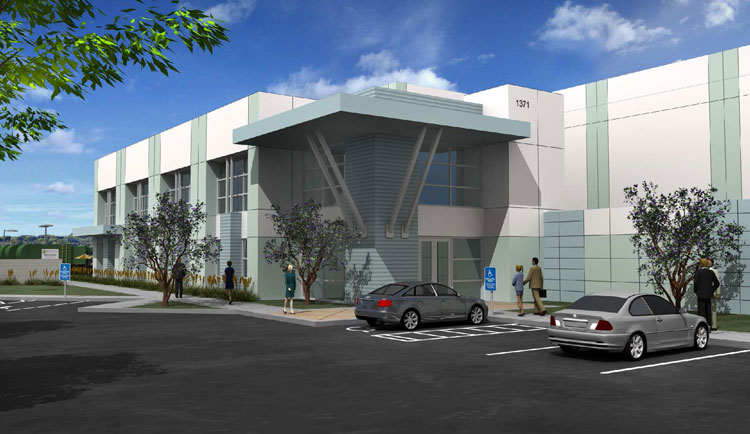
Current view of proposed Pomona Valley Transfer Station from 9th St (Google Street View)


Supporters say that the trash station would generate much needed revenue, would not pollute the water and provide limited localized air pollution, and add dozens of jobs. They call the transfer of trash from smaller to larger vehicles the "carpooling" of trash, and state that some form of trash combination is needed to account for the closure of the Puente Hills Landfill. Their testimony is borne out by the EIR, and the revised Statement of Overriding Considerations, which shows construction impacts to noise and particulate matter, and regional NOx emissions increase beyond the threshold, although the environmental consultant noted that virtually any significant project would exceed the NOx threshold. Apparently, the two residential properties which would have received higher than permitted cancer risks identified in the final EIR will no longer receive those due to the modification that all commercial trucks will be non-diesel powered.

Opponents argue that the project is within one mile of schools, cause dangerous cancer risk to nearby residents, violate air pollution standards, import trash from other areas, and be located in the poorest part of Pomona. Some say there is going to be a perception of Pomona as a "trashopolis". They have now advocated a vote be taken on this measure. The more interesting documents were presented at Planning Commission meetings refuting the City's experts. (As a general note, the applicant did pay for the preparation of the EIR, however the City officially directs the work of the consultants.) Some of the salient ones include comments by Richard Millhorn regarding the accountability of the applicant's operations and Dr. Matthew Mahtuga regarding the uncertainty bounds in the estimates on air pollution impact.

Summary and reading the tea leaves after the jump.

Tuesday, July 10, 2012

Slowly Destroying the Library

At the library taskforce meeting yesterday, library director Bruce Guter presented the city's plan to keep the library open for another year, *but* with major cuts in services. It appears that the library is still under major threat. Unfortunately the city's plan requires laying off all the long term librarians on August 15  (the director included) and replacing them with people paid by the hour.  This is a classic corporate strategy of laying off long term workers who make reasonable salaries to hire less experienced, less qualified (and less invested) people at much lower wages. Guter seemed resigned to fall on this sword. Given the lack of forward political thinking about the library over the last few years, however, I'd be willing to bet that it is not his own sword that is running him through, but one held out to him by the city.  

The library will lose one of its major assets: the librarians. They are the people who develop collections and programs, help students with projects, help people find books and resources, take care of those resources, and maintain the technology.  Librarians are experts at finding all kinds of stuff, and at helping people to use the library's resources to find what they need. Professors, teachers, students, moms, kids, job seekers, home owners, pet owners, gardeners, entrepreneurs, reporters, attorneys, leisure readers all rely on librarians. Under the city's latest plan, even if the doors of the library stay open, the quality and maintenance will not be there. It is a tragedy to watch the politicians slowly destroy this institution that is one of Pomona's proudest and oldest features.

A few months ago the city had a proposal to outsource the library on the table, but it did not go forward because of public pressure. Now they are trying to do the same thing, but this time under cover of the citizens' taskforce. Don't get me wrong, the taskforce is amazing. Many concerned people gather with great ideas and energy for saving the library. Yet the evidence would suggest that the city is working in the background to undercut the process and to get what they wanted all along.

One of the taskforce working groups has suggested that there may still be money to be found within the existing city budget--pockets of money here and there. But if there is no political will, there is no political way.  According to the Daily Bulletin, Paula Lantz lays the political blame with the people, when she says that no one complained at the prior cuts. According to this article, Lantz said, "I don't recall getting a single email or a single phone call saying, `How dare you.'"

But Lantz apparently forgets that the earlier threat to the library was (intentionally?) eclipsed by the threats to the police department. Many people turned out to speak to the city council about the library a couple of years back, but weren't able to speak, partly because there was so much to say about the police, and partly because Mayor Rothman severely delayed proceedings. (I should note that these same circumstances are being repeated right now with the Parks; the outsourcing of Park maintenance and the loss of more public jobs are being completely eclipsed by the threat to the library. Those who came to the council budget meeting to speak about the Parks couldn't get a word in edgewise.)

I would like to hear politicians and city staff talk about how to make the library flourish rather than to talk about how further to decimate one of the city's most important institutions. The library is a testament to the kind of city Pomona once was. The actions of the city's caretakers will show whether they wish to reinvigorate Pomona and restore it to its former stature or just hammer more nails into the goddess's coffin.

Trash station theater - Lawsuit minefield

As was posted here last week, the public hearing for the Pomona Valley Transfer Station ("trash station") will be next Monday, July 16, at 6 p.m. on the Western University campus. At the city council meeting tonight, there were complaints about the location of the meeting, since Western U's president is a key supporter of the trash station, and that being on private property is non-neutral

To be fair, I was one of the ones that suggested a larger hearing room. When I heard "Western U" I was originally thinking Buffums, but the location is actually the "Health Education Center", Building 6A, which is next to the old Freeman's Shoes and a brand new building with twin 356 seat lecture halls necessary for simultaneous Spanish translation, required under the CEJ vs. Pomona (First Street trash station) precedent. (Of course, the CEJ now supports the Ninth Street Trash Station - since they were opposed to First Street as part of a proxy war between two trash giants, but I digress.) 

There are multiple issues, however, with the location:
  • You can't find it: Opponents have a point in that buildings on the Western U campus, for outsiders, are hard to find. "309 East Second Street" on the street grid nominally is across the street from Robbie's, not all the way down by Towne Avenue. Here's a campus map to orient yourself. Lots of signage will be necessary to direct people in the right direction.
  • Where's the parking: The big parking structure off Towne Avenue is supposed to be for patients and authorized Western University staff and students only. VPD lots in the area all charge for parking after 7 p.m. with the exception, ironically, of the lot adjacent to the hearing site. The streets south of Western U have lots of cars from the apartment complexes off of Third Street. With something attracting hundreds of people, and hundreds of cars, they will be scattered all over. People will park in the VPD lot without paying, or in the parking structure, get ticketed, and get mad.
  • Where can people assemble: One concern is that as private property, Western U can ban gatherings and assemblies - and since the president supports the trash station, they might have the motive to do so. 
  • Who's guarding the meeting: Another person at the city council meeting brought up the issue of security, and Western U's possible heavy handedness at the meeting leading to a YouTube moment.
The location is closer to the residents than City Hall, but is less accessible to public transportation, requiring a four block walk from Mission and Towne. The Village Academy High School auditorium, used for the PUSD redistricting public hearings, would have been a great choice but it doesn't appear anyone thought about it.

Of course, having so much interest in the public hearing leads to additional issues:
  • Limiting public comment leads to charges of bias in the decision. Because of the large number of speakers present, either the meeting will extend forever or you give a speaker less than the regular three minutes. You can shorten the time for the hearing by throwing people out for clapping (although again, see above about YouTube moments), but there could still be significant disruption. Someone with technical testimony will complain that their sixty seconds was inadequate to present their statement. And, if you dial down the time in the middle of the hearing, someone will complain of unjust treatment since early speakers got more time than late speakers, based solely on luck of the draw. And will there be four votes to squelch public comment to sixty seconds?
  • If you make a decision too late in the evening, you could be challenged. The Assistant City Attorney noted this as a reason for forcing the Planning Commission to adjourn at 11 p.m., which led to the trash station hearing being held over three nights. The CEJ argued that since the First Street Trash Station was approved at about midnight, that there was a lack of deliberation because people just wanted to go home. So any decision after 11 p.m. could be suspect in the eyes of a court. One option is to hold open the public hearing, send everyone home, and discuss this later, but...
  • There's too much important business to postpone. With the tax increase needing to be discussed in July and the regular city council break in August, there's a lot to pack through. In September the fire proposals will come to the table. Even without public comment, having only six voting members means that four out of six have to make a decision. Otherwise, the proponents could argue in court that the project is "deemed approved", turning the opponents' use of the Permit Streamlining Act on its head.
It's too late to change the location now, since further delay will result in a lawsuit by the proponents

Nevertheless it is clear that the lawyers for the opponents will have more fodder for legal action should it be approved, as do the proponents if this gets denied. Opponents need to ask who is paying for the City's legal bill - the proponents of the project, or the General Fund, and gather funds to hire a good attorney. Proponents need to get their forces together and try  a ballot measure to approve their facility if the council doesn't approve this, if they really want it.

Later this week I'll look at the arguments for and against. More information from the proponents is on their web site and Facebook page, and the opponents also have a Facebook page and web site. If you have any comments about this series, my email is in my profile below.

Sunday, July 8, 2012

Tax increases on the horizon for Pomona services

On Monday the Pomona City Council will be looking at possible revenue measures to help pay for Pomona services like the fire department, library, and other services. The last day to put a tax increase on the ballot is August 7.

Here are some potential taxes on the table:

  • Library tax - This would require a 2/3 vote, and would be on a per parcel basis or other "uniform basis". Resident and fellow blogger John Clifford has suggested a $38 per parcel tax, with the cost increasing based on inflation. There is precedent as Los Angeles County charges a $28.61 library tax in the unincorporated areas.
  • Fire services tax - Los Angeles County has an existing tax, Measure E, which bills single family homes $61.04 a year for fire services. As a "fee for service" city, Pomona was not included in the taxing area. A 2/3 vote would be necessary to have Pomona residents ratify this existing tax.
  • Public safety tax - Pomona studied such a tax in 2004, but the city council did not place it on the ballot. In 1998 a $65 per parcel tax was proposed, generating $1.8 million, but it failed to pass by a 2 to 1 margin.
  • Sales tax - A quarter cent sales tax increase could generate over $3 million, and would only require a majority vote. Local cities with higher sales taxes than elsewhere in the county include El Monte, Montclair, Pico Rivera, and South El Monte. The concern is that it would hurt existing businesses in the city, since the tax rate in Pomona would now be 1.25% higher than across the border in Chino Hills (because Los Angeles County has 1% additional going for transportation than the other counties). On the other hand, it is dependent on the business mix within the area, as Pico Rivera has not suffered a significant loss in taxable sales due to the sales tax increase, as it has the only 24 hour Wal-Mart Supercenter in a large radius. Pomona, on the other hand, competes with the same types of chain stores in Chino Hills, La Verne, and Montclair.
In addition, the County's "Water Quality Funding Initiative" could generate revenue for the city to address stormwater issues, which could free up money in the general fund. This is a $54 tax on single family parcels (with more on larger parcels), and is scheduled for vote in 2013.

Any such tax measure would need the full support of the city council. The Mendoza taxes failed miserably, and there has been expression not to increase the utility tax.

Also on the table on Monday is an introduction of paid parking for the streets around the courthouse and Metrolink station. Free parking is still available a short walk away from those areas, and on the north side of the tracks adjacent to the bus loading platform. The pay station model will be used instead of individual meters at each stall.

The fun begins sometimes after 6:45 p.m. Monday at Pomona City Hall.

Bicycle Master Plan Meeting July 18


Pomona stakeholders, residents, employees, business owners, and others are invited to participate in a meeting: July 18, 2012 (6PM - 8PM). Stakeholders will provide input regarding the BMP/ATP process and documents. Stakeholder Committee members are asked to act as a liaison with their respective organizations, sharing meeting information and soliciting input from other stakeholders. Specific information sought at the July meeting will focus on preliminary bikeway recommendations and potential policies and programs. 
The meeting will be held Wednesday, July 18, 2012, from 6PM - 8PM at the Emerson Middle School (635 Lincoln Avenue, Pomona, CA 91767), on the east side of Towne Avenue north of Lincoln Avenue. Please contact Senior Civil Engineer Matt Pilarz at (909) 620-3652 or email matt.pilarz@ci.pomona.ca.us if you have questions. 


BMP Emerson Flyer

And no, this is all from special funds devoted to bicycle transportation, so no General Funds are used.

Friday, July 6, 2012

Pomona City Council v. the People...Again

A public hearing is scheduled on the Valley Vista Waste Transfer station on July 16. The announced location is Western University. In the choice of a private, non-neutral site, once again the City Council shows its disdain for the people and for public institutions.

Why has the council chosen a private venue for a public hearing? Why not the Pomona Unified School District (which has a larger hall)? Or the council chambers (horribly small, but still public, despite the Council's best efforts)?
 
Moreover, the President of Western University, Philip Pumerantz, has come out in favor of the Transfer Station, and is rumored to be close to David Perez. Shouldn't the hearing be held on a neutral site?

Finally, buildings on Western U campus are notoriously difficult to find.

To show their good faith to the people they serve, Council should change the site to PUSD or leave it at City Hall. 

Thursday, June 28, 2012

library, trash station, and now the gold line

Over on Twitter, our own David "D-Bomb" Allen (whom you can follow @DavidAllen909) is writing about his trip to the MTA (Metropolitan Transit Authority) meeting in downtown LA, where they voted to extend the transit tax not indefinitely, just until 2069 -- and to kill the extension of the Gold Line as far as Claremont.  If he hasn't already written this up on his blog, I'm sure he's crafting a brilliant article as we speak.  Anyway, I'm sure he'll have more information for us, or at least more than 140 characters.

Hey, Universe, got any other slings and arrows for the West Inland Empire?  Bring 'em on.

Wednesday, June 27, 2012

Outsourcing

City council's favorite solution is to outsource. Privatize, privatize, privatize. It is always a shortsighted solution, which takes power away from the people. When the city outsourced the fire service to the county, they lost many chances for collaboration and pitted police against fire, fire against the library and parks, and so on.

They plan to outsource the parks, no matter how much the city's youth might benefit from current volunteer programs, and no matter how much money these volunteer programs might save the city. One youth cited the figure of 80K to me at the council meeting. In a city so strapped for cash 80K is a lot of money, or so they tell us.
 
The city is also considering outsourcing the library, although where is as yet unclear. Another bad idea. The American Library Association did a study on the problems of outsourcing, which you can read here. Even outsourcing to another public entity will cause:

  • ·         loss of jobs
  • ·         loss   of control over programming and collections
  • ·         difficulty in regaining the facility for the city
  • ·         loss of community involvement
  •        potential loss of access to space for community groups
  • ·         loss of accountability
 
Council did manage to find 400K. So why why not use that money to keep the library open for another three months while looking for additional funding. If August 1 is the deadline for a ballot measure, as stated at the council meeting, we should get moving. The public task force will meet every week at 10 am at the library to plan next steps for saving the library. Everyone is welcome.

To resist privatization, we need to take back people power in other ways as well. At the council meeting the main place for ordinary voices to be heard was outside the council chambers--once again the mayor found ways not to listen to his constituents, this time by slowing down the budget presentation. People came expecting to be able to be heard. Everyone was told to be on time, 6 pm sharp. By 10:00 pm, people were exhausted and discouraged. Many left. If the council won't hear us and persists in putting public funds and the people's power into the hands of private corporations, then maybe we need to find other ways to make Pomona a place for the people.
 

Tuesday, June 26, 2012

Rancho Cucamonga: Cavalry to the rescue?

At 11:01 p.m. last night, the Pomona City Manager dropped word that the City of Rancho Cucamonga was interested in assuming control of the Pomona library, as a branch of its library, at a cost in the ballpark of the $400,000 placeholder indicated in the revised proposed budget.

So it appears that the cavalry may have shown up, contrary to my last post (and I do thank those who spoke, and butchered that Salinas analogy thoroughly - myself included).

The Victoria Gardens Cultural Center, which includes a library (left).
Many Pomona citizens are right to be skeptical, myself included. Mickey Gallivan, of the Pomona Valley Historical Society, after going on a rant about the lack of culture in the Northern California suburbs of Walnut Creek and Concord, asked if Rancho Cucamonga was trying to steal our history because Cucamonga has no history (although there may be more history than some folks realize). I am concerned that the proposed cost that Rancho Cucamonga may be proposing may be too low and not a good value for their constituents, who may end up not wanting to subsidize the noblesse oblige that their city manager appears to be engaging in - or may try to make up the difference later. Still others are concerned that Cucamonga staff will replace Pomona staff, and the institutional knowledge of our existing librarians and staff will be lost. Along with Ontario, Pomona is one of the few comprehensive public libraries in the Inland Empire, with a wide array of resources aside from popular books found at smaller libraries.

While I appreciate the sentiment and gesture from Rancho Cucamonga, it is important that this proposal be thoroughly vetted to ensure that it meets Pomona's values. While it certainly seems more favorable than a private company running the libraries, the devil is in the details. There needs to be enough money to fund this adequately, and not spend down precious reserves, or else the city may be better off shutting down the library, after all, to preserve its credit rating. Revenue needs to be an option, to fund these services properly for the long term.

Monday, June 25, 2012

Looking at fire - the last place to cut

When I retweeted a story this morning about the fire cuts, I got a response from a reader (since deleted), "you obviously do not live in Pomona and have to [sic] no vested interest in how it will affect the community. Thanks"

It's a common concern from Pomona residents, concerned about the closing of fire stations and not aware of the other hard choices made over the years to parks, police, the library, and other community services. As a Pomona resident, I have to deal with the fact that our citizens have expressed, on numerous occasions, their lack of willingness to pay to maintain the services that we have. But let's take a look back at what is actually being proposed, and past efforts at bringing fire costs down the line, after the jump.

Fire Station 188 - Phillips Ranch

Sunday, June 24, 2012

meeting

Just a reminder, if you haven't seen it elsewhere:  Tomorrow (monday) there is a 10am meeting at the library -- a meeting that essentially is standing in for the promised task force (harrumph) on how to save the library.  Everyone is welcome, and if you can make it, you should try to be there.

Tomorrow night is a meeting at 6pm at City Hall.  You might wish to be there for that too.  (I'm not entirely clear on the agenda for that -- anyone want to add information?)

One other reminder:  M-m-m-my Pomona is a community blog.  If you'd like to be one of the authors, just drop me a line and I'll send you an invitation.  Although no one would blame you if you refused to join a club that would accept you as a member.

Friday, June 22, 2012

Possible solution for the library

It's in the revised budget staff report.

The plan is to spend $400,000 (instead of $1 million) on the library after August 15, by contracting with a third party, municipal or private, to begin near August 16, 2012. This $400,000 would come from a swap of gas tax funds for general funds, and this means that funds that would have gone for sidewalk repair and replacement just got deferred (since the gas tax only pays for two thirds of the cost of maintaining public streets).

Also included are various items that could still be cut (such as senior meals, code enforcement reduction, after school programs, crossing guards), revenue sources (selling city property, billboards, trash transfer station fees, selling future cell phone tower revenue, and tax increases), and a discussion on the fire consolidation. Very little time is spent on the revenue projection, other than it is low - no other contingencies appear to have been made for other shoes to drop such as the local property transfer tax and hotel tax failing.

More details on the library after the jump.

Thursday, June 21, 2012

trash/library petition

If you're opposed to both the closure of the library and the opening of the waste transfer facility, a resident has started a petition, which you can check out (and sign) here.  It's moving up on 100 names now (after only a day); the goal is 500 names.  Make yours one, if you agree with the sentiments!

Tuesday, June 19, 2012

Trash station theater continued

Also notable is that trash station theater has been continued to July 16. If the organizers on both sides turn out their crowds, this could be an epic meeting - starting at 6 p.m. (one hour early), but with possibly hundreds of speakers - and all without the city council realizing that, if they go too late, that legal action will be taken on the decision.

Competing visions of the same facility.

Oh, and I did misspeak - after further review, the statement of overriding considerations is not subject to referendum. But there are enough grounds for CEQA and Federal Title VI lawsuits to keep this project bottled up for years to come (assuming someone can pay the lawyers).


Monday, June 18, 2012

make that "next week"

Apparently (as you know, I'm 357 miles north) city council postponed the library discussion till next week, purportedly to allow for time to hunt for ways to save the library.  I'm just a bit cynical; after all, they had all spring to work on this.  Surely they didn't walk into chambers, clap their hands to their faces like Macauley Culkins, and exclaim, "We had no idea that people would be so opposed!"?

The delay seems like a win for the council.  Fewer people will probably show up next week, and if they do manage to find some kind of solution, it will look as though they were responding to the public.  Kabuki theater, as Calwatch said a few days ago.

Yes, it's cynical to view things this way.  But how did I get so cynical?  By going to council meetings.

I look forward to hearing more from folks who were there or are otherwise better informed.

Library vote tonight

"A vote against the library is like a vote to burn books."
Overheated rhetoric? Or accurate statement?

If you haven't read my entire series, we've covered the legal case that the city manager has said led to the large budget shortfall, compared our situation to Salinas and told Pomonans why the cavalry will not rescue us, and looked at a campaign to raise taxes in Troy, Michigan, and how some city council members actively campaign against tax increases to support public services like the library.

Now it's your turn to speak out - tonight at 6:45 p.m. Be prepared to stay there for a while - past midnight, I've been at Pomona council meetings in the past that have ended in the 2 o'clock hour - and let your voice be heard.

Sunday, June 17, 2012

Pomona library closure: Where's the money?

Recently, the Troy, Michigan Public Library won a major advertising award for its satirical campaign, Book Burning Party. The Troy City Council placed a 0.07% property tax increase to fund the library and prevent cuts to other services, stating that the library would be closed if the tax didn't pass. The local Tea Party was focusing public attention on the tax increase, and the election was a low-turnout summer election that generally skews conservative. In order to re-frame the conversation, some library supporters posted signs for a book burning party following closure of the library, only to reveal two weeks before the election that this was all reverse psychology - although not without some passionate discussion generated, and dismay from some library supporters who wanted a more above board campaign. Even today the deceptive method of this advertising (hat tip Metafilter) has caused controversy.


Unfortunately, Pomona residents may never get to vote on this decision. While two City tax increases are on the ballot in November (increasing the hotel tax and the property transfer tax), no general tax increase is on the ballot, nor the "fire services tax" explicitly referred to as a condition of the County Fire approval to close down Fire Station 181.

In fact, the last time Pomona had to vote in a tax increase, it was actively opposed by City Councilmembers. That would be Measure SP, otherwise known as the "Mendoza tax increase", which was on the ballot in the November 2010 general election.

For those unfamiliar with local politics, John Mendoza is a local community activist that currently serves as the elected representative for North Pomona on the Three Valleys Municipal Water District. Over the years, he has pursued various initiatives for the city and the school district, such as the recent effort to partition school district voters into districts.

The Mendoza tax would have increased the utility tax by 2% for 26 months. Passage of the tax would have generated $3.9 million for this fiscal year and $3.575 million for the next fiscal year, enough to fund the library and pay off County fire. But Councilmember Freddie Rodriguez helped stop it, on the basis of a fanciful notion of wooing Fry's Electronics to the city. While long term developments like the proposed Target Center at the former auto center property were in the works, they will take a few years to start generating funds due to the long environmental process these projects take. Other councilmembers were either openly opposed to it or stayed silent.

Surprisingly, public employee unions did not get behind the initiative either, seeing that there was not any organization other than Mendoza himself behind the measure. They may have also been scared off by the previous Mendoza tax, a 1% increase in the utility tax, which also drew no organized campaigns in favor of the measure, and failed as expected.

In this informational review dated in 2008, the City Manager also discusses other sources of revenue, such as fully charging the cost of street lighting or landscape maintenance to taxpayers, instead of paying it through the general fund. Still others, like the trash transfer stations proposed on the east end of town, have been mired in an ongoing proxy war between two large waste haulers. Both of those could have generated enough money to save the library, and not at any large destruction to the City's image, as this list shows.

It certainly seems, however, that city leaders have no belief that the voters of Pomona will accept any tax increases or revenue enhancements, even when the remaining options are presented to them.

Saturday, June 16, 2012

Pomona library closure: Lessons from Salinas

The last big city to consider closing its library was Salinas, California in 2005. Salinas is demographically very similar to Pomona - heavily Latino, similar size, and comprised mainly of working class people with some rich areas. Salinas was short of $9.2 million and tried to raise taxes, which failed, and thus led to the proposed library shutdown. The closures received national attention and significant hand-wringing, yet there doesn't appear to be as much attention here paid by the national media (although hopefully this will be changing.)


Here are some major differences between Salinas and Pomona:
  • More libraries in the community. Salinas had three libraries in the community, with the main library built as part of the 1950's era civic center, one assumed when the city annexed unincorporated land, and one built as a result of population growth in the 1960's. When Pomona built its civic center, they built one large library, but never created branch libraries. Even in the boom times of the 1970's, Pomona did not develop branch libraries. 
  • Lack of connection to the local library. Many people in Phillips Ranch and North Pomona are closer to County libraries. The County libraries are much smaller, but offer a similar set of popular reading material and more importantly offer access to the entire County system, with many times more books than one individual library can. Interlibrary loan is generally clunky and expensive, so the advantage of placing a hold, for free, from the County system is a benefit for the savvy reader.
  • Salinas is the only game in town. In addition to the County libraries, Ontario has always had a deep collection - the best in the Inland Valley, even 15 years ago, and I went on trips with a friend's parents who consciously avoided Pomona to go to Ontario. Ontario had a large AV collection, and was open until 9 pm - Pomona always closed at 8, even pre-budget crisis, and its AV collection was modest (and gutted in the early 2000's to be replaced with the computer lab). And Ontario is only six miles  away. In contrast, the nearest big library to Salinas is Monterey, 18 miles away.
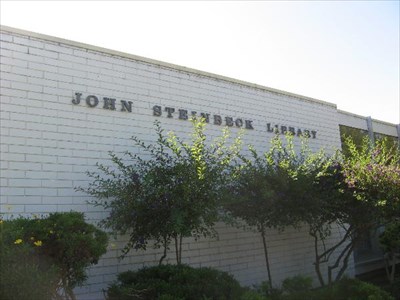
  • More local flavor. Salinas had John Steinbeck, and hosted the National Steinbeck Center. Pomona has some local authors but none with the international renown. It also is why Salinas got national attention immediately, while even Los Angeles media has been slow to pick up on the story.
  • We're inured to budget brinksmanship. With school districts issuing pink slips every year, only to be rescinded, and government agencies announcing cuts "to the bone" that ultimately have no impact on the average resident, it numbs the public. When Salinas proposed closure, it was unique.

One thing is for certain - the horses to save the library will not be coming from outside the community. Later we'll look at another key difference with Salinas - our city leader's refusal to seek additional revenue, and even oppose community-led efforts to generate funds.

Friday, June 15, 2012

Budget showdown on Monday

It's going to be a long Monday in Pomona.

Already various interest groups have fired up their e-mail lists and discussion groups. Local 1014, the firefighter's union, has placed an all-call to their membership on the closure of Fire Station 181. There is a Facebook group, "Don't close the Pomona library!!" created by a library employee. In addition, overlooked by the media, the latest installment of trash station theater happens Monday as well, with the city manager requesting the public hearing for the Pomona Valley Transfer Station be scheduled, denying trash station opponents' claim that State time limits have expired and that the project is therefore denied.

Here are the key items to look for:

  • Item 12 is the scheduling of a hearing for the trash station appeal. Possible hearing dates are July 2 or July 9. To avoid legal challenges, these hearings must end by a time certain and so could be continued indefinitely, as the Planning Commission used three meetings to hear the appeal. In addition, City Council could choose to deny a hearing, although that would trigger legal action from the proponents. But because of this risk, proponents and opponents of the trash station will spend their time convincing the council of their merits, and so all of the issues likely brought up at a public hearing would be heard now. The project itself has been modified such that all trucks leaving the facility will be CNG and the diesel fuel station has been eliminated.
  • Item 13 is a discussion of the "realignment" of fire services. It includes the closure of Fire Station 181, next to the Civic Center, and moving various equipment around the city, reducing the fire contract by $1.96 million or 8%. The firefighters' union has proposed instead that the city join the Consolidated Fire Protection District, instead of contracting in a fee for services arrangement. In this manner, property taxes move directly to the fire department, similar to the situation in cities created after Proposition 13 was passed. 
  • Item 15 is the state-mandated budget public hearing. Thirty positions are eliminated, with the closure of the library and the outsourcing of park maintenance. There are also accounting shifts in gas tax funding for street maintenance and internal services. Legally the budget must be adopted by the end of the year, or the previous year's budget continues on a month to month basis.

For those of you who don't go down the city hall often, the council chambers is small, with a capacity somewhere around 200 with about 40-50 people accommodated in the lobby. There is a loudspeaker that will blast the proceedings to the plaza. For those with cable or FIOS, meetings are also broadcast on the public access channel (Channel 29 for those with FIOS), although the quality of the audio can be questionable.

The meeting begins at 6:45 p.m., and although the city code only permits to go to 11:00 p.m. the council can choose to extend the meeting indefinitely. However, meetings have tended to be called at 7:00 p.m. or later due to straggling for council members to leave closed session. With the items on the agenda and public interest this meeting could last well beyond midnight.

Speaker cards are in the lobby and the city clerk reserves the authority to not accept cards submitted after the meeting has begun, although in practice speaker cards are accepted until the item has actually begun. The time limit is three minutes or at the discretion of the mayor. They go to the table in front of the public seating area. Generally they are not called in any particular order, with the exception of other elected officials who may be recognized earlier.

I've also been informed that the Los Angeles bureau chief for the New York Times is pursuing a story, either about the library itself or framing this and other budget decisions in a national context, to be published in the next few days. So interest is not waning on this one.

Thursday, June 14, 2012

news coverage of the library

Of course our beloved D-Bomb is on the case.  His article -- with a big photo of Ms. Lois! -- has been picked up by a number of the other Singleton newspapers, I gather.

Inside Palmdale vs. State Board of Equalization

So what was this decision that busted a million dollar hole in the city budget?
Palmdale vs. State Board of Equalization.

The chronology is as follows:

  • Out of state retailer sells goods from Pomona warehouse, thus all California purchasers have to pay California sales tax, which since this retailer has no resale permit in the state, is allocated to all agencies in the county (the "warehouse rule".)
  • Retailer pays $9.6 million in taxes over 14 years.
  • Pomona files an appeal in 1994 challenging this rule, which is exhausted in 2000.
  • The rules change in 2006.
  • Pomona files an appeal under the new rules in 2008.
  • State Board of Equalization grants hearing in 2009. 
  • Board staff recommend granting $4.8 million to Pomona, or 50% of the disputed amount.
  • The elected board overrules staff and grants Pomona $7.1 million, or 75% of the disputed amount.
  • Cities for which the money gets taken away from sue the State Board in 2010.
  • The Superior Court overturns the State Board decision in 2011.
  • Following legal back and forth, parties settle, such that the cities that sued the Board withdraw the lawsuit, the State Board's decision is reinstated and the State pays Pomona the $7.1 million, at which point Pomona would pay each city an individually agreed upon amount. Pomona reimburses each of the other cities a total of about 51% of the Board-ordered amount, such that the City of Los Angeles recovers about $2 million and the others a smaller amount. As a result of the settlement, everyone has to tell the appeals court to go along with the withdrawal of the judgment, pretending that the lawsuit never happened.
  • The appeals court refuses to go along with this, and voids the settlement, noting that the City of Los Angeles would have lost $2.32 million under the State Board's decision, and that the State Board overreached in making the original decision in the first place. Therefore, no funds are paid to Pomona at all.
The appeals court noted the following:
Today, all cities in the state are in need of funds to provide adequate police and fire protection, libraries, public parks, and other public services.  [...] Cities and their residents — the public — have a right to know why a city is losing or gaining millions in local sales tax revenues, that is, a right to know the Board‘s grounds for reallocating those taxes. 

Citizens also have a right to know why the City was counting on over a million dollars in funds that didn't actually exist. Did the Finance Manager count on this settlement revenue in Fiscal Year 2012-13, out of a sense of optimism, instead of waiting for all appeals to expire? Did the City Attorney, in believing that a deal had been cut with every other party, think that the appeals court would just rubber stamp the decision? Why was this revenue even booked in the first place, considering the endless amount of legal fees that this lawsuit seems to have consumed? 

These are questions that no one will answer in public because of "litigation" and "negotiation with employee representatives", but it deserves to be asked. This failure to consider contingencies does not speak well of City management.

Tuesday, June 12, 2012

woe betide us?

Word on the street is that the public library is closing for good on August 15, with all the employees -- every last one of 'em -- pink-slipped. Can anyone confirm or deny this (preferably the latter)?

All I can think of is that this is some kind of ploy to get the citizenry to accept the outsourcing of everything to the county, but as far as I'm concerned, outsourcing is part of what got us into this financial swamp to begin with.

The one thing I know for sure is the old adage: Closing libraries in a time of plummeting test scores (to say nothing of gang activity) is like closing hospitals during an epidemic.

The image is from the Laura Ingalls Wilder Children's Room website -- soon to be gone, but never forgotten.

Monday, May 28, 2012

I've Quit Facebook

There are times when you just have to take a stand and I've decided that the greed in this country is just too much to handle. The latest example of this is that Eduardo Saverin (image at left), a co-founder of Facebook who has renounced his US citizenship.

The news has pointed out that he did this one day before the Facebook IPO which created millions of dollars of profit for him and which he now, since he's a foreign citizen, doesn't have to pay taxes on. While he defends his actions as a desire to become a citizen of Singapore, it doesn't really jibe with his timing.

While I gladly do business with companies that are foreign (I purchase gas from Arco, which is British Petroleum, or Royal Dutch Shell, for example) at least I'm aware of the foreign nature of the business and agree to that.

This situation is different. What is really galling about this situation is that he was born in Brazil, came to this country and was educated in our finest schools and at Harvard, then went on to make $2 billion from the country that he became a citizen of. Now that he's gotten it, he's taking it and leaving and renouncing that country that gave him the opportunity to get rich.

While he currently has no personal involvement with FaceBook, he is still a 5% owner and my only way of reacting to this is to ensure that he won't make any money in the future from ME. Facebook will not have my eyeballs for their advertising messages so in a small way I will diminish their potential profit.

That this information comes right around Memorial Day, when we honor those who sacrificed for our country, this %$&# is doing the exact opposite of sacrifice. You'll now be able to find me on Google+.

Again, as a result, I've gotten rid of my account and don't plan to be back.

Friday, May 25, 2012

Pomona Public Library’s Adult Summer Reading Program!


Pomona Public Library’s
 Adult Summer Reading Program!

June 4, 2012 – July 25, 2012

Nook Glow Light Join us this summer at the Pomona Public Library!
Open to adults 16 years and older. No minimum reading requirements! The Grand Prize Drawing will be a NOOK Simple Touch with GlowLight! Signups start June 4 at the Pomona Library Adult Reference Desk. For more information call (909) 620-2043 x2701.

Celebrate Our Local Pomona Valley Authors
June 16, 1:00 - 3:00pm, Public Conference Room, Free

Meet Bob Smith and take a trip through Inland Valley history. Listen to Bill Wallace and his memories of growing up in post World War II Pomona. Learn about the misadventures and hidden past of fictional character Dulcie Clascock brought to life by Janet Beech.

Thanks to the Friends of the Pomona Public Library for their generous support of the Adult Summer Reading Program.

Friday, May 18, 2012

Pomona's war on recycling and Stater Brothers' future

At Monday's City Council meeting, the Council is poised to reject, without a public hearing, the existing recycling center located at Pomona's Stater Brothers at 1045 North Garey Avenue.

According to the City's own staff report, this recycling center has been in operation for about 23 years, with no complaints until a recent examination by a Planning Commissioner after other recycling centers were being considered for adoption.

The applicant makes several points regarding the operation of the recycling center. State law creates "convenience zones" within a half mile of supermarkets. What the staff report glosses over is that "convenience zones" offer a convenience not necessarily to the consumer, but to the supermarket. The supermarket can redirect persons who have recyclables to a location within a half mile, and absolve themselves of the responsibility under State law to redeem cans and bottles at the site.

Otherwise, the supermarket must either redeem cans and bottles at all open hours within its walls, causing issues with Public Health and possibly resulting in violation of other City and State Codes, or pay $36,500 a year in fees to exempt themselves of this rule. With the growing competition from low priced supermarkets like Cardenas, Super King, and El Super, and "Anglo" supermarkets like Vons and Winco only a few minutes away by car, it is possible that Stater Brothers may opt to reevaluate their business plans if they have to manage the cans and bottles redeemed by residents, or pay a large fee.

In addition, a state mandate, AB 712 passed unanimously by the State Assembly and State Senate and signed by the Governor. Pomona could lose grant funding. As stated in the bill, "This bill would, notwithstanding the above expenditure requirement, prohibit the department, on and after July 1, 2012, from making any payments, grants, or loans, as provided, to a city, county, or city and county, if the city, county, or city and county has adopted or is enforcing a land use restriction that prevents the siting or operation of a certified recycling center at a supermarket site, as defined, as may be required pursuant to a specified law." 

As the City is enforcing this land use restriction, supplemental payments that the City is entitled to receive for its curbside recycling will now be cut off. The City will also be ineligible for grants related to recycling. In a year where the City Council considered holding a special election to increase the hotel tax and property transfer tax just to get a few more months of revenue, any loss of easily obtainable funds should not be acceptable. It also increases the risk that the City will not comply with trash diversion mandates, and subject the City to fines.

City staff has not identified any other location within a half mile of Stater Brothers that would be desirable for a recycling center, as most of the commercial sites along Garey abut neighborhoods.

The bottom line is, if the recycling center goes, Stater Brothers could go with it, as it has at its South and North Pomona locations, thus creating a huge blight on the neighborhood. While some markets would have no issues with redeeming containers within their walls, it is doubtful that Staters would allow cans and bottles to be stored within their boundaries. In order to maintain a quality supermarket in the Lincoln Park area, this Planning Commission decision must be overturned and the original City planning staff recommendation, which offered reasonable limitations on its operation, be upheld.

The meeting is May 18 at Pomona City Council Chambers in the Civic Center. This is Item No. 14, which if the current staff recommendation is turned down, would only allow for a new public hearing to be held, possibly on June 18. If the staff recommendation is upheld, there is no date set for closure of the recycling center, or of the market.

Saturday, April 21, 2012

Pomona to raise taxes by mail?

The other day I got a flyer from John Mendoza on my door step with a copy of a recent Pomona City Council report and the following note:


Pomona resident city council of Pomona [sic] are getting ready to raise taxes by changing the way we vote. Instead of regular election in November the city council are being urged by city staff to have the first ever in Pomona Mail Ballot only elections. Most of Pomona residents would not know a election was taxing [sic] place and the city of Pomona could raise property taxes and utility taxes with the vote of only a few. NO to Mail Only Elections in Pomona and sneaky taxes. John Mendoza


To clarify, the idea currently on the table, as part of Pomona's "looking for change under the cushions" program, is to double the property transfer tax and to increase the hotel tax by 2% to 12%, not an increase of property or utility taxes. As part of this, the City Council was looking into amending the City Code to allow for mail-in elections. The mail in election would cost about $100,000 more than just adding the measure to the regularly scheduled November ballot, however if the two measures are approved the increased revenue would be $350,000 for about a $250,000 gain as a result of the tax being in place an additional three months.

Still there is a concern of mail in ballot measures sneaking taxes through to the public, although some of this is actually required under California law. The proposed Clean Water Clean Beaches initiative, which would impose a $54 additional parcel tax on most single family homes, is required to be held via a mail in ballot because it is a property assessment for which the cost is based on the square footage of the lot, and benefits the property which is being taxed.

Low turnout elections have a habit of getting only the people in the know to vote. For example, the Bell fiasco was partly caused by a charter amendment and bond measures stuck on an off cycle election scheduled on November 29, the Tuesday after the Thanksgiving holiday and in the middle of most people's year-end holiday preparations. With the Post Office shuttering distribution centers and planning to end Saturday service, mail-in elections will become even more difficult to be conducted. Although some have decried Pomona's city elections being held on the same day as the presidential election as turning out "uninformed" voters, I would argue that a higher turnout provides greater legitimacy for those who are elected.

Regardless, it would take a unanimous vote of the City Council to allow for a special emergency that would place the property transfer tax and hotel tax increase on the ballot. With such a low turnout, any organized opposition to the measure would cause it to fail handily. Overall, there are enough safeguards that, as a one-time measure, this is probably fine.

(Ultimately, this discussion was postponed to May 7, so that would be a good time to make your views known should you choose.)

Sunday, April 15, 2012

Friends of Fox Swing Dance Anniversary Gala


Saturday, April 21--81st Anniversary of the opening of the Pomona Fox Theater and Third Anniversary of the Reopening of the restored theater.


Dinner Tickets available at DPOA or on our Web Site. All Dinner reservations must be made by Tuesday. Price: $45 or $55. Dance / Listening only tickets are $20 and are available online, at DPOA, Frantz Cleaners, Ebell Museum of Pomona Valley or at the door on the night of the event. (Sorry, no dinner tickets available at the door.)

For all the information on this event, visit www.pomonafox.org.

Funds received will be used to restore the original 1931 Gladding McBean drinking fountains which were original to the theater.

Thursday, April 12, 2012

see below


For those of you reading by RSS feed, a certain Anonymous -- not sure which of our many -- has begun an interesting conversation in the comments of a three-year-old post about the murder of Emilio Moncayo. I refer you to the "Recent Comments" sidebar if you're interested. Feel free to add your two cents either there or here. (If you add them there, there will be a pause while I approve -- any comments more than two weeks old must be approved, as an anti-spam device.)

In other news, I was down in Pomona all of last week -- sorry not to have seen many of y'all. The old nabe is as beautiful as ever, although there seems to be more activity in the alleys (which the PPD seem to be addressing with more assiduousness than in years previous).

I believe the image is the magnificent work of Juan Thorp at Bunny Gunner, but I'm not entirely sure.

Sunday, February 26, 2012

Parking costs increase in Downtown Pomona

On Monday the Pomona City Council will be considering charging for nighttime parking in Downtown Pomona, and for expanding the hours and increasing the prices of parking in the downtown. Currently parking is charged during business hours weekdays only - the new fee structure would increase the rate from $2 to $3, while creating free parking for three hours between 7 am and 7 pm, seven days a week.

After 7 pm, most lots downtown will now charge a flat $1 rate. Although city staff did not do a comprehensive parking study, most cities in the Inland Empire do not charge for parking in their traditional downtowns in the evening hours. Even downtown Riverside, arguably one of the more vibrant downtowns in the Inland Empire, has free parking at parking structures on weekends and evenings. The comparison is being made to Pasadena, but Pomona is not Pasadena, and Pasadena is the only city in the San Gabriel Valley that imposes night and weekend parking fees for visitors to their traditional downtown.

While Pomona draws a lot of people during the evening to the Fox Theater, Glass House, and clubs on Thomas, as well as people from throughout the region on Art Walk nights, the level of activity in Downtown Pomona is nowhere near cities such as Pasadena, Santa Ana, or Los Angeles which charge for parking seven days a week and on nights in their downtowns. Places like Monrovia, Riverside, San Bernardino, Claremont, and Redlands which have evening attractions do not charge for parking.

The funding is supposed to be going for a parking structure, however until serious infill begins the need for the structure is minimal. Western University has already accommodated much of its parking needs through construction of the parking structure on Towne Avenue. In addition, there are opportunities to build a parking structure using Proposition A Local Return transit dollars, which would serve Metrolink parking needs during the day and commercial needs at night.

After the parking fee is imposed there will still be a handful of lots downtown that will not charge for parking, as well as parking spaces on the street (unless parking meters are planned to be placed there as well) and all private property lots (subject to enforcement by the private property owner). I've taken the staff report and highlighted in green the lots that will remain free. The average visitor, however, is not likely to find these lots. There will also be spillover parking impacts to Mission Promenade and residential neighborhoods surrounding the downtown. Especially in this economy we need to encourage as much visitation as possible, while managing the legitimate traffic concerns during concert nights. One dollar will not necessary break the bank of someone spending over $100 per car on drinks and a show, but it could discourage casual visitors from coming back.

The City Council will be hearing this public hearing item Monday evening. The meeting begins some time after 7 p.m. If approved nighttime parking charges could begin as soon as April 1.

Wednesday, January 25, 2012

CicLAvia could come to Pomona

The Pomona Director of Public Works is inviting all "stakeholders" to join in a discussion next Tuesday at 6:00 p.m. regarding an "open streets" event, or ciclovia. The Los Angeles version is called CicLAvia. CicLAvias are great opportunities to bring communities together through eliminating car traffic for six to eight hours, while encouraging active transportation. The concept began in Bogata, Colombia, in 1976.

I've been to the Los Angeles event twice and it is a great event. The Pomona one would be on a smaller scale, as the Los Angeles event attracts people region-wide, up to 100,000 of them at once. My primary concern with the Los Angeles event is the fact that some bicyclists treat it as a raceway and not an opportunity for all human-powered uses, including skateboarders, pedestrians, and just people hanging out on the street, to use the additional space created. In other words, it's a linear park, not a bicycle freeway.

It is also great to see that leadership has changed in Pomona from the retrograde days of just six years ago, when City leaders flushed a million dollar bike lane down the drain due to neighborhood opposition and political opportunism. AB 32 and SB 375 have forced Californians to be more cognizant of greenhouse gas emissions, and include greenhouse gas reductions in planning and land use decisions. An attempt to suspend AB 32 failed miserably in 2010 so it is clear that planning for greenhouse gases will only grow in the future, and one of the most effective ways to reduce carbon emissions, increase public health, and reduce dependence on foreign oil is to provide environments where people can use active transportation for daily tasks. Even today Pomona just has one bike lane, on Hamilton Boulevard, while many of the streets in South Pomona and Phillips Ranch are excessively wide and could be restriped easily to add a bike lane.


The stakeholder meeting is on Tuesday, January 31st, at 6 pm at the Cal Poly Downtown Center. The consultant will have maps of proposed closed streets and other information for consideration.


Please RSVP to Maura Montellano at 909-620-2262 or via email at maura_montellano@ci.pomona.ca.us.

Monday, January 23, 2012

Human Trafficing Film at Fox

I received an email from Nathan Neighbor of Mosaic Community who have an art gallery on Thomas Street and conduct weekly Church services at the Pomona Fox Theater on Sundays. I think that this may be of interest to some of you. Here's Nathan's message:

My name is Nathan Neighbour, and I work with the Mosaic community that meets in the Fox Theater each Sunday.  Next Sunday, January 29th at 2pm we are hosting a community awareness event at The Fox around the issue of human trafficking, a huge problem in the Pomona Valley.  Thousands of girls as young as age 12 are bought and sold in the sex trade industry right here in our city.  

 We will be screening a film called FLESH: Bought & Sold in the US and will have a panel of film makers and community leaders joining us (including the mayor and chief of police).  The Fox has graciously partnered with us to make this event happen and get the word out to the community.

Thursday, January 19, 2012

right here in river city!

I can't believe I had to learn it from a Claremont friend, but apparently there's a Pomona pride (lower-case P, because I don't think it's the Prop. 8 kind of Pride) event this weekend -- including a performance by Flavor Flav. Take me back to my youth, Calgon!

Of course, looking at the poster, the misspelling of "amateur" jumps right out at me. Oh, Pomona, why must you always match every step forward with half a step back? Do we want the rest of the West Inland Empire thinking we can't spell? No we do not!

Do any of our fine readers know anything about Diamonds Love Foundation, the co-sponsor of the event?

I learned about this via Twitter. I'm wondering, how many Pomoniacs are on Twitter? I follow @pomonafeed and @tweetpomona (which mainly seems to tweet Pasadena)... Anybody else out there I should follow? [For what it's worth, I'm @mmwwah, but I don't tweet much about local matters, either SoCal or NorCal.]

Tuesday, January 17, 2012

Redistricting takes center stage

In the span of 16 hours, key decisions will be made that will impact the lives of Pomona residents for the next ten years. This is about redistricting - the decennial redrawing of lines to ensure equitable distribution of population after each census. Redistricting impacts the representation that residents have, and on a greater scale determines whether communities of interest are kept together or are broken apart, and whether the rights of minorities are maintained or regressed. Poorly drawn districts can result in some areas being considered less than others and receiving fewer resources and attention from the elected official, or could invite extensive and costly litigation as attorneys for protected groups challenge the new lines.

At 5:30 pm on Tuesday, the Pomona City Council will meet to discuss council redistricting. The city staff has opted to handle it themselves, and not go into an outside consultant. Staff and the City Attorney have gamely identified 24 possible areas for moving populations and tried to shift them around to reduce deviation as much as possible. With the Phillips Ranch area, District 5 having the least population and North Pomona, District 6, with the greatest population, any district move would have a domino effect on the whole city. Unfortunately, due to poor scanning of the staff report, it is unclear where all these chess pieces will end up. Nevertheless areas near the boundaries of districts, such as Val Verde, Westmont, and Downtown Pomona could be at risk of moving to another district.

Critics of the staff-driven process say that it is not transparent where these considerations come from, that they have not allowed the community to express their preferences as to what they consider a community of interest is, and that they do not provide racial demographic information to ensure that protected ethnic groups are not adversely impacted by these moves, due to Voting Rights Act considerations (which are referred to in the staff report but subsequently not evaluated with respect to the new district proposal). Many cities with districts choose to go to one of the major providers in California of redistricting services - Matt Rexroad's Meridian Pacific, Paul Mitchell's Redistricting Partners, or Doug Johnson's National Demographics Corporation. Having the experience of doing many cities' redistricting helps greatly in understanding the key legal issues that, if not addressed, could result in extensive and costly litigation.

The next morning (Wednesday) at 8 a.m. the Three Valleys Water Board will discuss redistricting of its water district lines. The Water District has two proposals provided by Redistricting Partners that could radically shift the City-based lines of today into lines that do not match up with any water district lines or City lines. In particular, small portions of North Pomona could be disunited with the rest of the city under the "minimal changes" option, with the primary impact breaking Walnut up from one district into three. In "Option A", Claremont and South Pomona could be united in one district that would be extremely diverse in terms of demographics and water purveyors.

Again, there are issues of transparency as Redistricting Partners was selected without any indication of the selection process or how they were chosen. The public input on this has been minimal, with one resident comment and one comment from an elected official.

Everyone has a different perspective of their community. Some would like to see Downtown Pomona as part of one district, while others feel that as many council members as possible should share an interest in Downtown. Similarly, City lines may not be important for some people, and having South Pomona and Claremont in the same Water Board district may still be in a community of interest, being on the east end of the County line.

If you don't feel that your community is being kept whole, let your voices be heard. You can write to the members of the City Council here, and to the Three Valleys Municipal Water District at vhahn@tvmwd.com. You can also speak at the public hearing for the Three Valleys Municipal Water District in Claremont at 8 a.m. on Wednesday, or to the City Council at the Council Chambers during public comment some time after 5:30 p.m. Tuesday.